Panna Tiger Reserve is not only about tigers. It is home to more than 200 bird species drawn to its rich mosaic of habitats — dry deciduous forest, rocky Vindhyan plateaus, the Ken River riparian corridor, and open grasslands along the forest fringe.
The Ken River is the beating heart of Panna's birdlife. Its banks attract Indian skimmers, herons, kingfishers, and in winter, bar-headed geese. The forest trails hold resident raptors, woodpeckers, and an extraordinary array of smaller woodland species.
Panna is one of the most important sites in India for critically endangered vultures — white-rumped, Indian, and red-headed vultures all nest and feed in the reserve, making it a globally significant birding destination for anyone interested in conservation.
Both resident and migratory birds are well represented. Winter (October–March) brings an influx of migrants including Indian Pitta, bar-headed geese, and waders along the river. Resident species are present year-round, with breeding activity peaking in April–June.
White-rumped Vulture
Critically EndangeredPanna is one of India's key nesting and feeding sites for this globally threatened species.
Indian Vulture
Critically EndangeredRocky cliffs in the reserve provide nesting habitat. Often seen soaring on thermals over the plateau.
Red-headed Vulture
Critically EndangeredOne of Asia's rarest raptors — Panna remains a reliable site for sightings.
Sarus Crane
ResidentIndia's tallest bird, standing nearly 6 feet. Often seen in pairs in the grasslands and farmland edges.
Indian Skimmer
ResidentFound along the Ken River — watch it skim the water surface with its lower bill to catch fish.
Crested Serpent Eagle
ResidentA powerful forest raptor — often heard before seen, with its distinctive loud call through the canopy.
Changeable Hawk-Eagle
ResidentMedium-sized eagle of the dry forests. Perches high and often spotted on open branch tips at dawn.
Brown Fish Owl
ResidentRoosts along the Ken River — best spotted at dusk near large trees overhanging the water.
Indian Pitta
MigratoryA jewel of the winter forest. Arrives October–March; its distinctive two-note whistle betrays its presence in dense undergrowth.
Pied & Common Kingfisher
ResidentBoth species are abundant along the Ken River. Perch on exposed branches and dive with precision into the shallows.
Woolly-necked Stork
ResidentA stately waterbird found in wetlands and along the river — unmistakable with its white woollen neck.
Bar-headed Goose
MigratoryWinter visitor from Central Asia — arrives in large flocks along the Ken River from November onwards.
Forest trails, rocky grassland edges, and the Ken River banks within the reserve offer the widest variety. Morning jeep safaris are excellent for spotting raptors, owls, and the open-country species that feed alongside ungulates.
The riparian zone near Nature's Lap Resort is excellent for waterbirds — scan for kingfishers, Indian skimmers, herons, cormorants, and waders without entering the reserve. The river is particularly active at dawn and dusk.
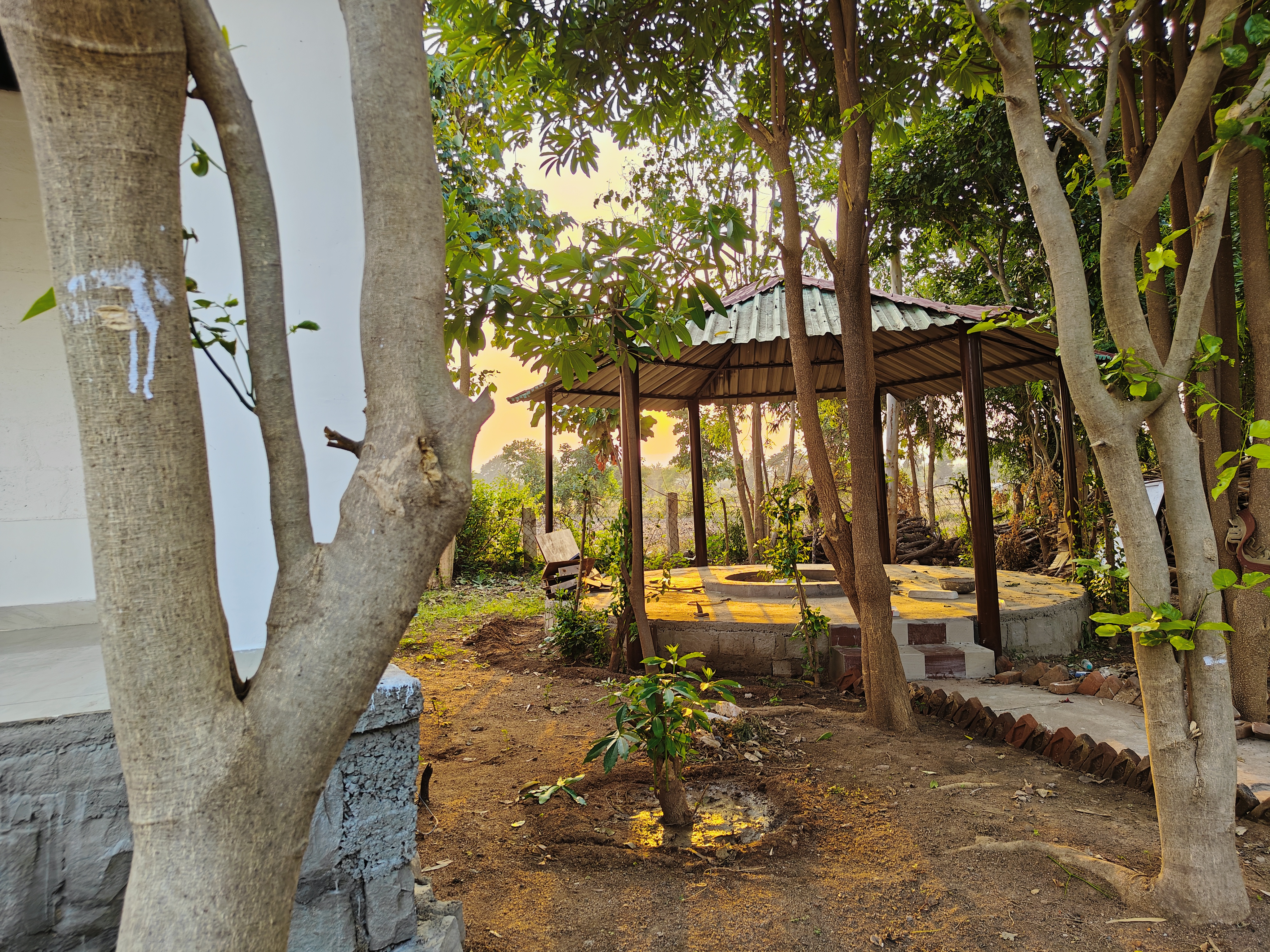
The mature trees on our property attract treepies, barbets, sunbirds, parakeets, and woodpeckers year-round. Early morning on the resort grounds, binoculars in hand, is often unexpectedly productive — especially during migration.
The waterfall and surrounding moist forest zone draws numerous species in the early morning — including species that aren't commonly seen in the drier main forest. The moisture gradient creates a distinctly different microhabitat.
October – March
Peak Birding SeasonWinter migrants arrive from Central Asia, Tibet, and the Himalayas. Vegetation thins after the monsoon, making spotting dramatically easier. The reserve is open and at its most accessible. The best period for the widest species count.
April – June
Resident & Breeding SeasonResident birds are highly active — breeding behaviour, displaying, and nest building. Raptors are conspicuous. The forest is hotter and drier, concentrating wildlife around waterholes and making some species easier to observe.
July – September
MonsoonThe reserve is officially closed during peak monsoon. However, the resort grounds and Ken River outside the reserve remain active — lush vegetation and insect abundance attract a good variety of forest edge and waterbird species.
Our naturalists lead guided birding walks in the early mornings — the most productive time for birding. Walks are 2–3 hours along the Ken River bank and the forest fringe, with spotting scopes and illustrated field guides provided.
Suitable for absolute beginners and experienced birders alike. Our guides know the key spots, the resident individual birds, and the seasonal arrivals — giving you a depth of knowledge that self-guided birding simply cannot match.
Tell us your dates and birding goals — we'll arrange guided walks, safari permits, and the ideal room for an early morning start.